Blog
How to Care for Your Sarees So They Stay Beautiful for Years

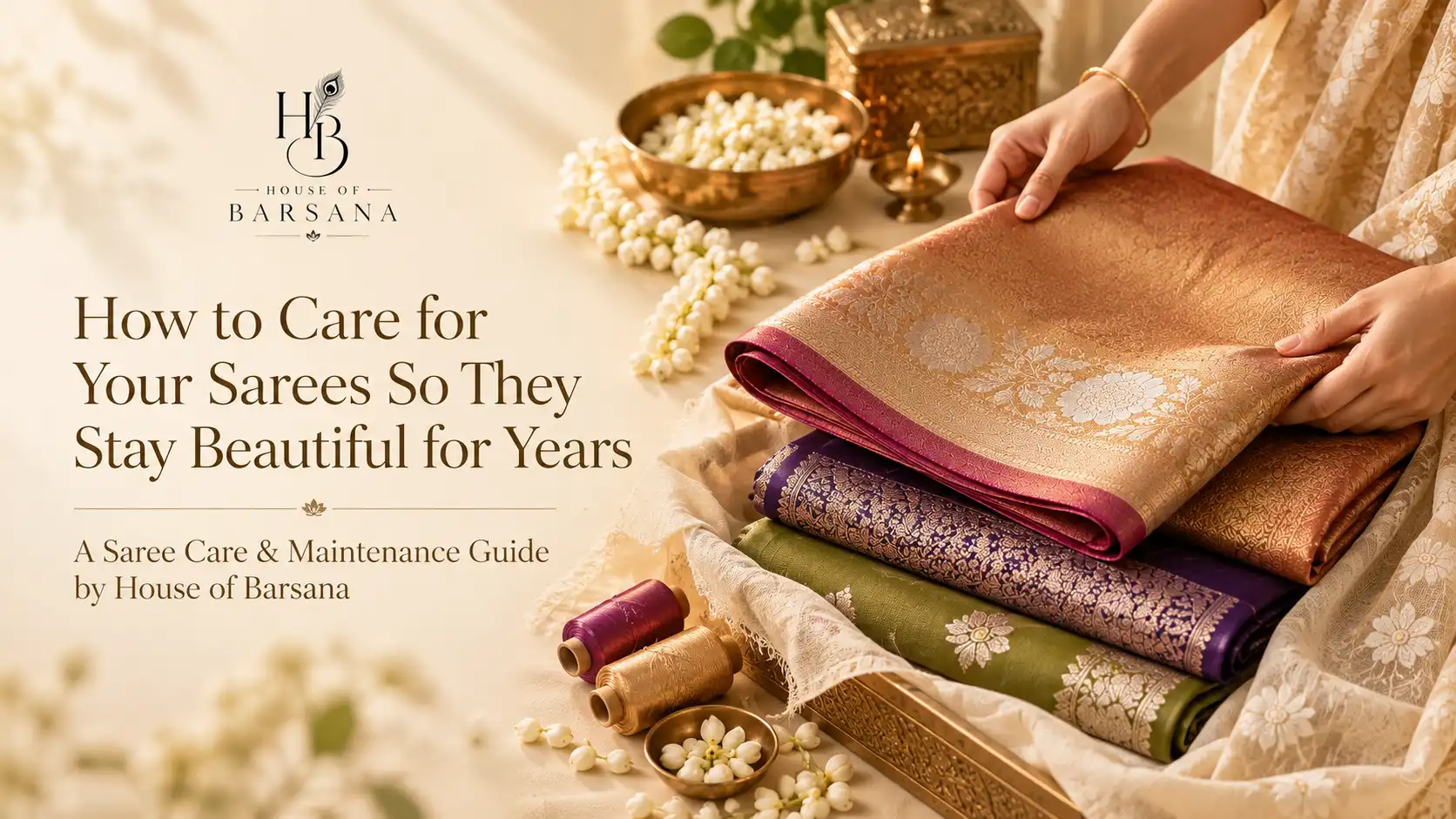
A beautiful saree is more than just an outfit.
It is a piece of tradition, elegance and personal memory. Whether it is a richly woven silk saree, a festive drape with intricate detailing or a timeless piece you reserve for special occasions, proper care is essential if you want it to remain as graceful as the day you bought it.
At House of Barsana, we believe every saree deserves thoughtful care. Fine fabrics, delicate motifs and traditional craftsmanship need attention so their beauty can last for years.
If cared for properly, a saree can remain a treasured part of your wardrobe and even become something you pass on through generations.
Here is a simple and practical guide to maintaining your sarees beautifully.
Why Saree Care Matters
Sarees often feature delicate fabrics, woven borders, zari work, fine motifs and detailed finishing.
Without proper care, these elements may lose their texture, shine and structure over time.
Incorrect washing, poor storage, damp conditions or careless folding can lead to:
- Fabric damage
- Loss of shine
- Fading colour
- Creases and fold marks
- Zari dullness
- Stains becoming permanent
- Weakened fibres
A little care can make a significant difference in extending the life of your sarees.
1. Always Check the Fabric First
The way you care for a saree depends heavily on the fabric.
Not all sarees should be handled in the same way.
For example:
Silk sarees usually require more delicate care and are best dry cleaned.
Cotton sarees may allow gentle hand care, depending on the weave.
Tissue, zari or heavily detailed sarees should be treated with extra caution.
Light festive or occasional sarees may need careful storage to maintain their drape and texture.
Before cleaning a saree, always understand what kind of material and detailing it has.
2. Prefer Dry Cleaning for Premium Sarees
For richly woven, silk, zari or occasion sarees, professional dry cleaning is often the safest option.
Dry cleaning helps preserve:
- the fabric texture
- the woven detailing
- the shape of the saree
- the richness of the colours
- the finish of decorative elements
Frequent washing at home can sometimes weaken the fibres or affect the saree’s appearance, especially in premium fabrics.
A saree worn occasionally does not need frequent cleaning. In many cases, a single professional clean after use is enough.
3. Never Store a Saree Without Airing It
After wearing a saree, do not fold and store it immediately.
Even if it looks clean, it may carry body moisture, perfume or traces of humidity from the environment.
Before storing it:
- open the saree fully or partially
- let it air out in a shaded indoor space
- avoid direct harsh sunlight
- make sure it is fully dry before folding
This simple step helps prevent trapped moisture, odour and fabric damage.
4. Fold Sarees Carefully
Improper folding is one of the most common reasons sarees lose their structure over time.
When folding a saree:
- smooth the fabric gently
- align the borders properly
- avoid pressing too harshly
- keep pleats neat but not overly tight
- fold in a way that reduces pressure on the same crease lines
For premium sarees, it is a good idea to change the fold every few months. This helps prevent permanent crease lines and reduces stress on the same fabric areas.
5. Use Muslin or Cotton Cloth for Storage
Sarees should not always be stored directly in plastic packaging for long periods.
Plastic can trap moisture and may affect the fabric over time.
Instead, store special sarees in:
- soft muslin cloth
- cotton saree bags
- breathable fabric covers
This allows the saree to stay protected while still getting enough airflow.
Premium sarees, especially silk and hand-finished pieces, benefit greatly from breathable storage.
6. Keep Sarees in a Cool, Dry Place
Humidity is one of the biggest enemies of beautiful fabric.
A damp cupboard or poorly ventilated storage area can damage sarees over time and may even affect zari or woven detailing.
Always store sarees in a place that is:
- clean
- dry
- cool
- away from excess moisture
- away from direct sunlight
Avoid placing them too close to areas where water leakage or humidity is common.
7. Protect Them from Direct Sunlight
While airing a saree is helpful, prolonged exposure to direct sunlight is not.
Strong sunlight can lead to:
- fading of colours
- weakening of fibres
- loss of softness
- dullness in the overall appearance
If you need to air out your saree, do it in a shaded or softly lit area rather than in harsh direct sun.
8. Handle Stains Immediately
If your saree gets stained, do not wait too long.
Food stains, oil marks, makeup and perfume residue can become difficult to remove if ignored.
For stains:
- blot gently, do not rub harshly
- avoid random home chemicals
- avoid soaking premium sarees
- take heavily detailed sarees to a professional cleaner quickly
Rubbing too hard can damage the weave, spread the stain or affect the detailing.
9. Be Extra Careful with Zari and Detailed Borders
Borders and pallu sections usually receive the most visual attention, but they are also the areas that need extra care.
Avoid:
- excessive friction
- folding the zari border too tightly
- hanging heavy sarees carelessly for long periods
- spraying harsh perfume directly on detailed fabric
Zari, woven borders and handcrafted patterns should be preserved with minimal stress and careful handling.
10. Do Not Overcrowd Your Wardrobe
A tightly packed wardrobe can crush delicate sarees and disturb their fall and finishing.
Give your sarees enough space.
A neatly arranged wardrobe helps:
- reduce wrinkles
- prevent fabric rubbing
- protect embellishments
- keep sarees easy to access
- maintain shape and drape
If possible, reserve a section of your wardrobe specifically for special sarees.
11. Keep Sarees Away from Sharp Accessories
Jewellery, hooks, pins and embellished blouse details can accidentally snag delicate sarees.
When wearing or storing your saree, be careful around:
- sharp bangles
- brooches
- hair accessories
- blouse hooks
- rough zippers
- pointed jewellery edges
Even a small pull can affect the weave or create visible thread damage.
12. Refold and Revisit Your Saree Collection
Premium sarees should not be forgotten at the back of a cupboard for years.
Every few months:
- take them out
- inspect them
- air them gently
- change fold lines
- refold neatly
- check for any signs of moisture or dullness
This simple routine keeps your collection healthier and more wearable.
13. Travel with Sarees Carefully
If you are carrying sarees while travelling for a wedding or event, avoid stuffing them carelessly into luggage.
Instead:
- fold them properly
- place them in a soft fabric cover
- keep them in a separate section
- avoid placing heavy footwear or hard items over them
For especially premium sarees, keeping them in protective cloth layers can help preserve the finish during travel.
14. Preserve the Emotional Value Too
Some sarees are valuable not only because of their design, but because of the memories attached to them.
A saree worn at a wedding, festival or family celebration often becomes emotionally meaningful over time.
Caring for these sarees properly means preserving more than fabric.
It means preserving a part of your story.
A Well-Cared Saree Lasts Beautifully
The charm of a saree lies in its grace, drape and detailing.
When properly maintained, it continues to look elegant year after year.
A thoughtfully cared-for saree can remain festive, beautiful and wearable for a very long time.
At House of Barsana, we celebrate sarees not just as garments, but as timeless expressions of tradition and elegance. With the right care, every saree can remain a cherished part of your wardrobe for years to come.
Because true beauty deserves preservation.
House of Barsana
Draped in Grace. Crafted with Tradition.