Blog
A Guide to Saree Fabrics: How to Choose the Right Fabric for Every Occasion

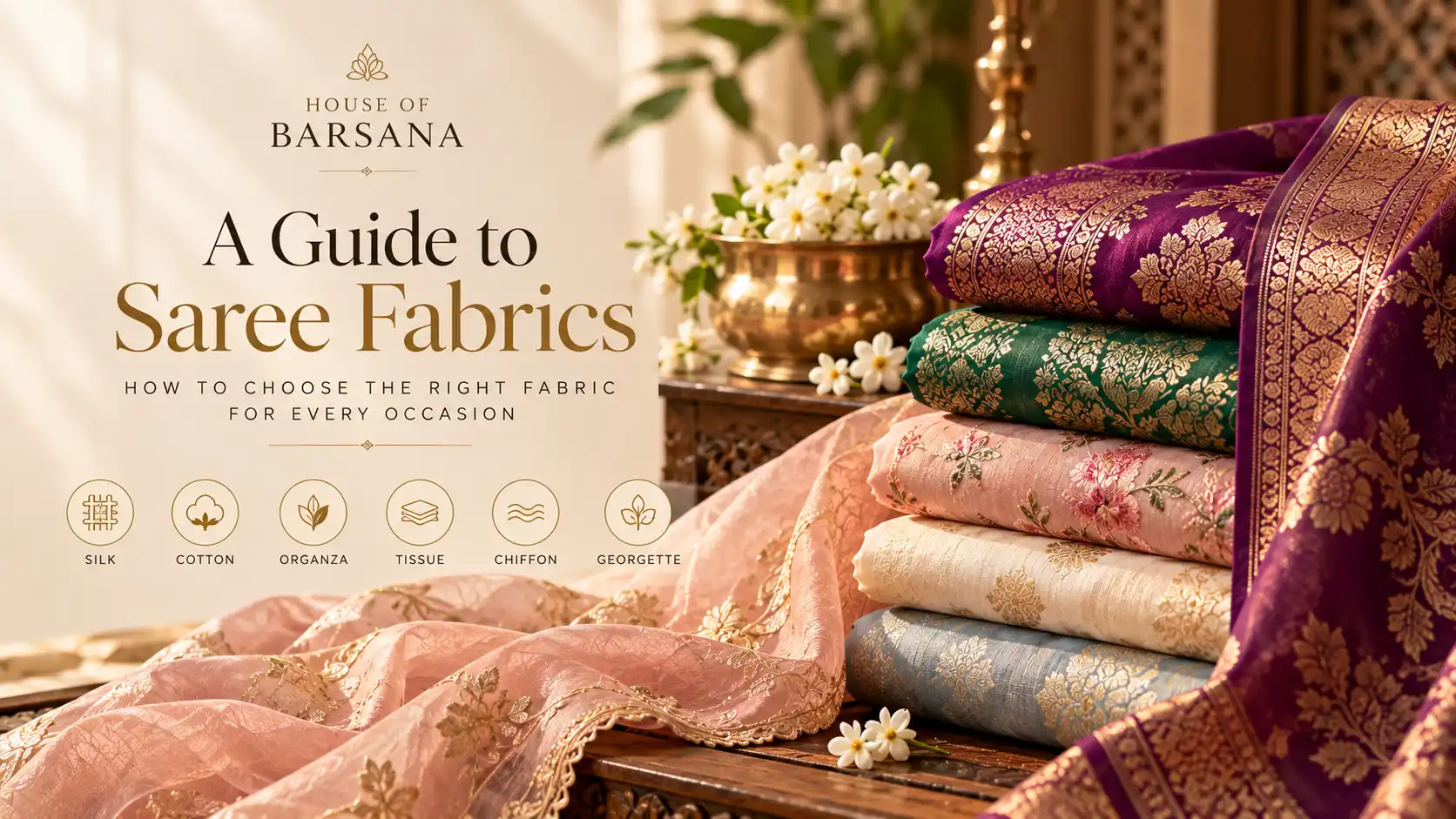
A saree may be defined by its colour, border and detailing, but the fabric is what gives it life.
It determines how the saree falls, how it feels against the skin, how easily it can be draped and how suitable it is for a particular occasion.
A rich silk saree may feel perfect for a wedding, while a lighter fabric may be more comfortable for a daytime celebration or an intimate gathering.
At House of Barsana, we believe understanding saree fabrics helps you choose pieces that not only look beautiful but also feel right for the occasion.
Here is a simple guide to some of the most loved saree fabrics and how to choose between them.
Why the Fabric of a Saree Matters
The same design can look completely different depending on the fabric.
Fabric affects:
- drape
- comfort
- structure
- shine
- weight
- movement
- overall appearance
Some fabrics create sharp, elegant pleats, while others create a softer and more fluid silhouette.
The right fabric can make styling easier and help you feel more confident throughout the event.
1. Silk Sarees
Silk remains one of the most timeless choices in Indian fashion.
Its rich texture, natural sheen and graceful drape make it ideal for traditional and formal occasions.
Silk sarees often work beautifully for:
- weddings
- engagement ceremonies
- festivals
- religious functions
- family celebrations
Their luxurious appearance makes even a relatively simple design feel special.
Why Choose Silk?
Silk has a natural richness that photographs beautifully and creates a regal silhouette.
It also pairs extremely well with zari borders, traditional motifs and intricate woven patterns.
For a classic wedding or festive look, silk remains one of the most reliable choices.
2. Banarasi-Inspired Weaves
Banarasi-style sarees are known for their rich woven appearance and intricate detailing.
Traditional floral patterns, ornate borders and metallic accents create a luxurious finish.
These sarees are particularly suited for:
- weddings
- receptions
- festive evenings
- special family events
Deep shades such as purple, maroon, emerald, navy and antique gold work beautifully with this style of weaving.
Styling Tip
When the weave is highly detailed, keep the blouse and jewellery balanced.
Allow the saree itself to become the statement.
3. Cotton Sarees
Cotton sarees offer an entirely different kind of elegance.
They are breathable, comfortable and beautifully suited to daytime wear.
Cotton works especially well for:
- summer events
- puja ceremonies
- family gatherings
- daytime celebrations
- semi-formal occasions
Their crisp drape gives a clean and sophisticated appearance.
Why Women Love Cotton Sarees
Cotton combines tradition with comfort.
It feels light, allows the skin to breathe and can look incredibly refined when paired with a simple blouse and minimal jewellery.
4. Cotton Silk Sarees
For women who want the comfort of cotton with the elegance of silk, cotton-silk blends can offer an ideal balance.
These fabrics generally feel lighter than pure silk while still carrying a gentle sheen.
They are versatile enough for:
- festive gatherings
- small wedding functions
- office celebrations
- puja
- daytime events
Cotton silk is especially useful when you want a saree that feels dressed-up without being excessively heavy.
5. Organza Sarees
Organza sarees have become popular for their light, structured and graceful appearance.
The fabric has a slightly sheer finish that creates an elegant contemporary silhouette.
Organza works particularly well for:
- engagement functions
- daytime weddings
- brunch celebrations
- receptions
- modern festive looks
Floral patterns and subtle borders look especially beautiful on organza.
How to Style Organza
Pair organza with a clean, well-fitted blouse and minimal jewellery.
Because the fabric itself has a distinctive structure, simple styling often creates the most sophisticated result.
6. Tissue Sarees
Tissue sarees are known for their luminous metallic finish.
They catch light beautifully and create a soft festive glow.
They are a wonderful option for:
- wedding receptions
- evening celebrations
- Diwali gatherings
- formal festive occasions
Gold, champagne, rose gold and copper-toned tissue sarees can feel particularly luxurious.
Best Styling Approach
Because tissue already has natural shine, avoid over-accessorising.
A refined blouse and elegant earrings are often enough.
7. Chiffon Sarees
Chiffon is lightweight, soft and fluid.
It follows the body naturally and creates a graceful silhouette without feeling heavy.
Chiffon sarees are ideal for:
- evening parties
- intimate celebrations
- dinner events
- destination functions
They are also comfortable to wear for longer periods.
Why Choose Chiffon?
Women who prefer effortless draping often enjoy chiffon because it falls naturally and creates soft pleats.
8. Georgette Sarees
Georgette offers a slightly more textured feel than chiffon while still remaining lightweight.
It is versatile and works well for both traditional and contemporary designs.
You can choose georgette for:
- cocktail functions
- receptions
- parties
- festive gatherings
- semi-formal events
It is also a good choice for women who want a manageable saree that is easy to carry.
9. Linen Sarees
Linen sarees have a relaxed elegance.
Their natural texture creates a sophisticated appearance that feels both traditional and modern.
Linen is especially suitable for:
- daytime celebrations
- summer gatherings
- semi-formal occasions
- minimal festive styling
Neutral shades, earthy colours and subtle borders complement linen beautifully.
10. Brocade Sarees
Brocade sarees are known for their decorative woven patterns.
The design is incorporated directly into the fabric, creating texture and depth.
These sarees can look particularly grand and are well suited for:
- weddings
- festive functions
- receptions
- formal celebrations
Floral and traditional motifs often enhance the luxurious character of brocade.
Structured vs Flowing Sarees
One of the easiest ways to choose a fabric is to decide what kind of drape you prefer.
Choose a structured fabric if you want:
- defined pleats
- a regal silhouette
- traditional styling
- a fuller appearance
Silk, cotton and organza are good options.
Choose a flowing fabric if you want:
- softer movement
- lightweight comfort
- easy draping
- a more contemporary silhouette
Chiffon and georgette are excellent options.
Choosing Fabric According to the Occasion
Different occasions naturally suit different saree fabrics.
Wedding
Consider silk, brocade or richly woven sarees.
Reception
Tissue, silk, organza and luxurious lightweight fabrics work beautifully.
Festival
Silk, cotton silk or traditional woven fabrics are wonderful choices.
Daytime Event
Cotton, linen or organza can create a fresh and refined appearance.
Evening Party
Chiffon, georgette or tissue can produce an elegant modern look.
Puja or Traditional Ceremony
Cotton silk, silk and classic lightweight woven sarees work especially well.
Consider the Season
Comfort matters just as much as appearance.
Summer
Choose breathable and lighter materials such as cotton, linen, chiffon or organza.
Winter
Silk, brocade and heavier woven sarees can feel more comfortable and luxurious.
For indoor events, you can focus more on styling and occasion rather than the weather alone.
Think About How Long You Will Wear It
A wedding celebration may last for several hours.
A short dinner event may require far less movement.
Before choosing a fabric, consider:
- how long the event will last
- whether you will be walking frequently
- whether you will be sitting for long periods
- how comfortable you are managing heavier fabrics
The most elegant saree is one you can wear confidently throughout the occasion.
The Border Can Change the Entire Look
Fabric and border should work together.
A heavy traditional border can make a silk saree feel extremely regal.
A thin metallic border can make an organza saree look modern.
A simple woven border can give cotton a timeless appeal.
When choosing a saree, look at the complete combination rather than focusing only on the base fabric.
How to Choose the Right Saree Fabric for You
There are no strict rules.
Start with three questions:
Where am I wearing it?
The occasion helps determine how formal or elaborate the fabric should feel.
How do I want it to drape?
Choose between structured and flowing silhouettes.
Will I feel comfortable wearing it for several hours?
Comfort should always be part of the decision.
The ideal saree should complement both the occasion and the person wearing it.
Building a Versatile Saree Collection
A well-balanced wardrobe does not require dozens of sarees.
Instead, choose a few different fabrics so you always have something appropriate for different occasions.
A versatile saree collection could include:
- one rich silk saree
- one lightweight festive saree
- one cotton or linen saree
- one elegant evening saree
- one contemporary organza or tissue saree
With different blouses, jewellery and draping styles, these pieces can create many distinct looks.
Fabric Gives a Saree Its Personality
Every fabric tells the saree’s story differently.
Silk feels regal.
Cotton feels timeless.
Organza feels refined.
Chiffon feels effortless.
Tissue feels luminous.
The right saree is not simply the one with the most beautiful design. It is the one where the colour, craftsmanship and fabric work together beautifully.
At House of Barsana, we celebrate sarees that combine traditional elegance with thoughtful design, allowing every woman to find a drape that feels truly her own.
House of Barsana
Draped in Grace. Crafted with Tradition.